
Exodus 16:4, 19–24; Matthew 6:34; Lamentations 3:22–23 (KJV)
Sometimes the thing exhausting you today hasn’t even happened yet. Tomorrow’s exam and next month’s bills. Boards next year, and whether you’ll match after that. Whether your family can keep managing this schedule, and whether the thing you’re afraid of now will create another thing to be afraid of later. You can be sitting at your desk on a Monday while emotionally living in next March.
Israel learned something about that in the wilderness. God told Moses:
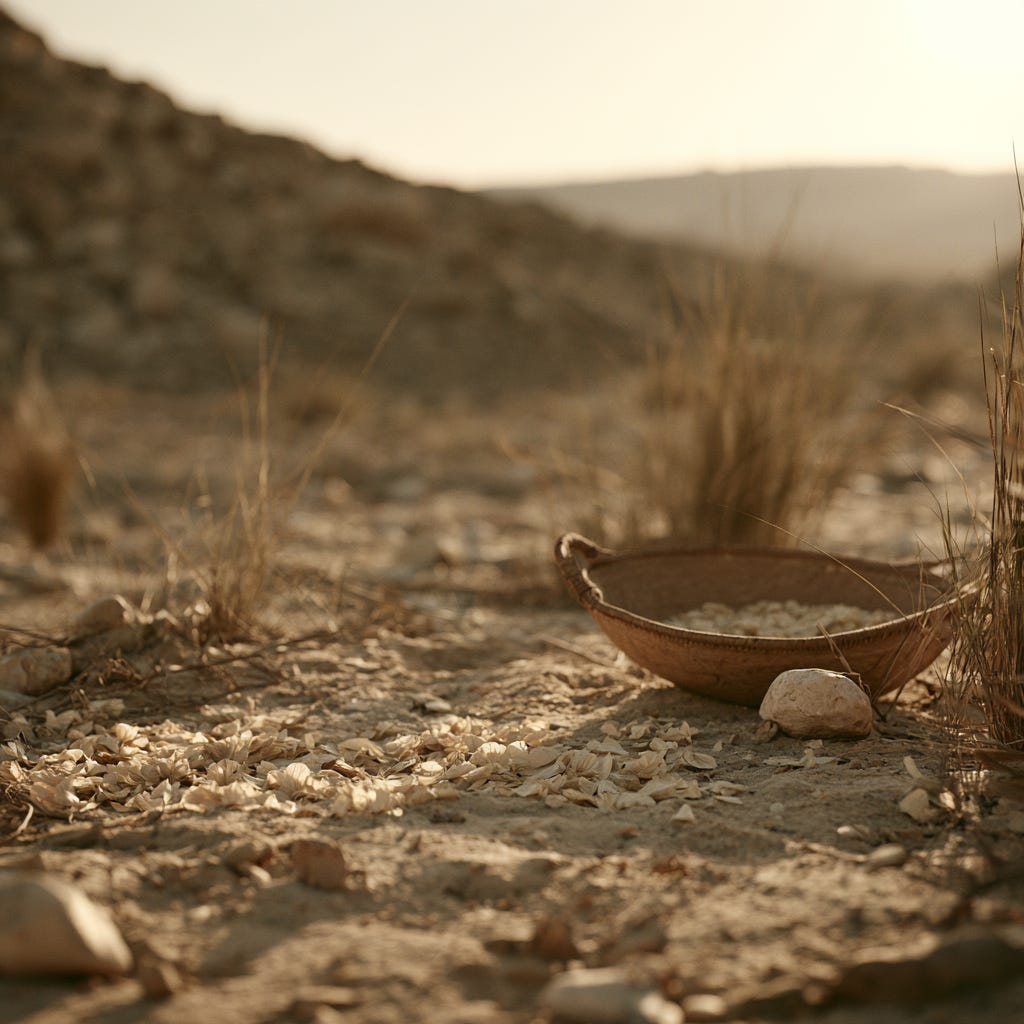
Behold, I will rain bread from heaven for you; and the people shall go out and gather a certain rate every day, that I may prove them, whether they will walk in my law, or no. (Exodus 16:4)
Every day. Not a semester’s supply, and not enough to stockpile. Enough for the day God had given them. Notice the end of that verse, too. The daily rhythm was a test of trust, a question of whether they would walk with Him one morning at a time.
Some of them didn’t trust the arrangement. Moses told them not to keep any overnight, but “some of them left of it until the morning, and it bred worms, and stank” (v. 20). They tried to secure tomorrow with today’s provision, and it rotted in their hands.
Here’s the detail that’s easy to miss. On the sixth day God told them to gather twice as much and keep half for the Sabbath, and that manna “did not stink, neither was there any worm therein” (v. 24). Keeping food overnight was never the problem. Keeping it against God’s word was. In this case, what He told them to prepare for, He preserved.
Centuries later Jesus said, “Take therefore no thought for the morrow: for the morrow shall take thought for the things of itself. Sufficient unto the day is the evil thereof” (Matthew 6:34). The KJV’s “take no thought” means anxious care, not planning. Scripture commends foresight, from the ant storing food in summer (Proverbs 6:6–8) to Jesus’ own words about counting the cost before you build (Luke 14:28). Planning prepares for tomorrow. Anxiety tries to live tomorrow before it arrives.
You need a study schedule, and you should know when your application is due. But there is a point where preparation ends and mental time travel begins. You’re no longer studying today’s material. You’re imagining what today’s difficulty will mean six months from now, trying to emotionally survive problems that haven’t happened. And your body doesn’t always know the difference. It gets tired from carrying futures that don’t exist yet.
Lamentations says the LORD’s mercies “are new every morning” (Lamentations 3:23). Some grace comes with the morning it belongs to. That means Monday’s strength may not feel sufficient for Friday, because Friday’s grace hasn’t been required yet. We frighten ourselves by inspecting today’s resources and concluding, There’s no way I can carry everything that’s coming. Maybe not. But God never asked you to carry everything that’s coming tonight.
This is hard in healthcare training, because so much of it points forward. You study now for the exam later, and you finish this course for the board exam after it. Responsible planning matters. But you can plan for tomorrow without demanding that your nervous system live there. “Sufficient unto the day” is almost a permission slip. You’re allowed to stop carrying what hasn’t arrived.
Maybe you’ve done what today’s preparation required, and your mind still wants one more hour because tomorrow exists. Then another. At some point, faithfulness may mean stopping. Maybe today’s assignment was three chapters, not the entire discipline of cardiology. Maybe there’s a question whose answer literally cannot exist until somebody emails you back. Leave it there.
Jesus taught us to pray, “Give us this day our daily bread” (Matthew 6:11), not this year’s supply. Daily provision keeps us close. And in Christ, tomorrow isn’t arriving somewhere God has stopped being present. The God who meets you today will still be God when the next morning comes. You don’t need tomorrow’s strength tonight.
Reflect
What future responsibility are you already carrying emotionally, even though it hasn’t arrived?
Are you planning for tomorrow, or repeatedly trying to live it in your mind?
What would faithfulness to today actually require before you stop for the night?
Prayer
Father, thank You for being the God of daily bread. Teach me to prepare wisely without trying to control what hasn’t arrived. When my mind runs months ahead, bring me back to the work and the grace You have given me today. Give me courage to stop when today’s work is finished, trusting that tomorrow will not arrive without You. Provide what I need for the day I am actually living. In Jesus’ name, amen.
Before You Go
Tonight, ask yourself one question: “What did faithfulness require of me today, and did I give it?” If the answer is yes, let the day end. If something truly belongs to tomorrow, write it down somewhere you trust and leave it there. You can plan tomorrow without carrying it. In the comments, tell us one thing you’re giving yourself permission to leave for another day. And if someone you know is trying to survive next month before finishing today, send this to them