
Acts 27:20–44; Psalm 46:1–2 (KJV)
Acts 27 isn’t a storm anyone on board can manage. The ship is caught and driven. The cargo goes overboard, then the ship’s tackling, and for many days there’s no sun and no stars to steer by. Then Luke writes one of the bleakest sentences in the chapter: “all hope that we should be saved was then taken away” (Acts 27:20). Not mild discouragement. The people on that ship no longer expected to survive.
Then Paul, a prisoner on his way to trial, stands up and speaks. An angel of God had stood by him in the night, he tells them, and God had promised that no lives would be lost. But listen to the whole promise: “there shall be no loss of any man’s life among you, but of the ship” (v. 22). The people will survive. The ship will not. And Paul’s confidence rests on one thing: “for I believe God, that it shall be even as it was told me” (v. 25).
Two weeks pass. They’ve barely eaten. And while the storm is still raging and the shore still isn’t in sight, Paul urges everyone to eat.
And when he had thus spoken, he took bread, and gave thanks to God in presence of them all: and when he had broken it, he began to eat. (Acts 27:35)
The ship is still in danger. The storm hasn’t become a testimony yet. Paul gives thanks anyway. That’s mature gratitude. Thanksgiving doesn’t have to wait until the crisis is past tense.
We need a guardrail here. Paul had a specific word from God about the lives on that ship, and we shouldn’t take his promise and turn it into a guarantee that nothing devastating can happen to us. The ship really did break apart (v. 41). What Paul had was enough truth to stand on inside the uncertainty. God had spoken, God had not abandoned them, there was still bread in front of him, and there was still a next step. That was enough for thanksgiving in that moment.
This is what God’s faithfulness can look like: keeping His word to the people inside the vessel, even when the vessel itself is lost. Psalm 46 says, “God is our refuge and strength, a very present help in trouble. Therefore will not we fear, though the earth be removed, and though the mountains be carried into the midst of the sea” (vv. 1–2). Notice what stays stable in that psalm. Not the earth, and not the mountains. God.
Some of the hardest seasons hold that strange mixture. You can see God’s provision and still watch something break. You can say, God carried me, and also, I wish this had ended differently, and both sentences belong to the same testimony. Maybe the ship is a timeline you carefully planned, or a program, or a professional identity, or a relationship you expected to last. Sometimes we assume redemption means God has to preserve the original vessel. Acts 27 gives us another picture: “they escaped all safe to land” (v. 44), and the ship stayed in pieces on the rocks.
That doesn’t mean every loss is God’s intentional method of getting you somewhere better. Scripture doesn’t give us permission to assign a divine explanation to every broken thing. But it does mean His faithfulness isn’t limited to keeping your future in the shape you expected.
So the thanksgiving some of us need this year doesn’t sound like thank You because nothing changed. It sounds like thank You because You are still God inside what changed. Thank You for the strength that came today. Thank You for the person who stayed, and for the grace to make the next decision. Thank You that although I can’t see the shore, I’m not outside Your sight.
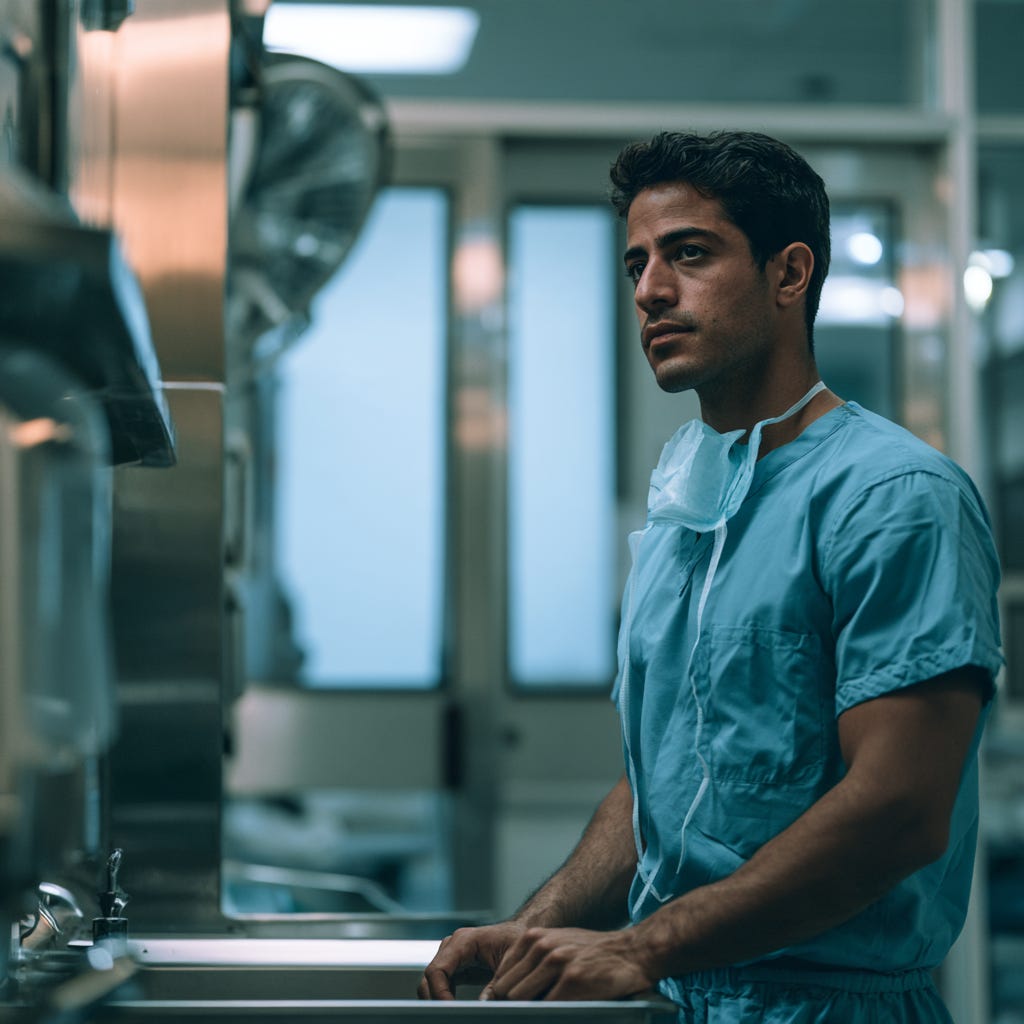
And notice that Paul gave thanks “in presence of them all.” One prisoner’s settled trust became visible in a room full of frightened people, and the next verse says, “Then were they all of good cheer, and they also took some meat” (v. 36). Paul couldn’t stop the storm or save the ship. But he could stand inside it, take bread, thank God, and help terrified people take the next necessary step. That sounds a lot like healthcare. You won’t always be able to fix what’s in front of you. Sometimes all you can do is stay present, tell the truth, and help someone through the next hour. Don’t underestimate that kind of faithfulness. Sometimes gratitude looks less like celebration and more like breaking bread while the storm is still going.
Reflect
What unresolved situation has made you feel you can’t be grateful until you know how it ends?
Paul said, “I believe God.” What has God actually said that you can stand on while the storm is still going?
What has God provided inside this storm that you can genuinely thank Him for today?
Prayer
God our refuge and strength, You are a very present help in trouble. Some things in my life are still unresolved, and I don’t know what will make it through this storm the way I hoped. Keep me from pretending certainty You haven’t given, and open my eyes to the grace You’re providing right now. When something breaks, remind me that Your faithfulness has not broken with it. Give me enough courage for the next step, enough bread for today, and enough trust to give thanks before I see the shore. In Jesus’ name, amen.
Before You Go
Name one storm that hasn’t ended yet. Then write: “What has God given me inside this storm?” Don’t answer with what you hope He’ll eventually do. Stay with what’s already present: a person, a Scripture holding you steady, strength for today, another morning. Thank Him for that. In the comments, share one way God has sustained you before your circumstances were resolved. And if someone you know is waiting for the storm to end before they believe God has been present, send this to them.